

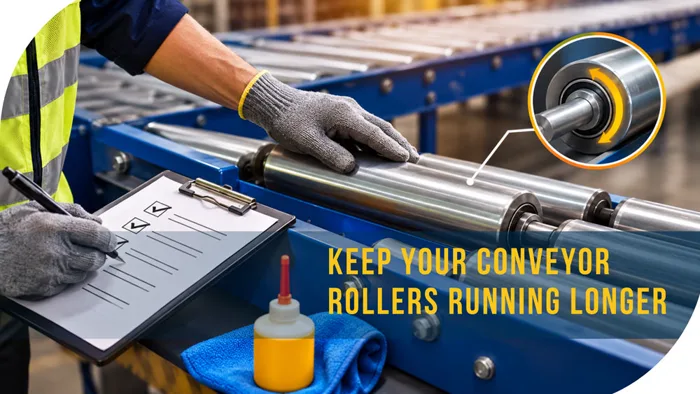
Roller Maintenance Tips to Increase Equipment Lifespan
Why Regular Roller Maintenance Matters
Conveyor rollers play a critical role in keeping materials moving smoothly across production and handling operations. Over time, dust, debris, misalignment, excessive loads and inadequate lubrication can affect roller performance and increase wear.
Following effective roller maintenance tips can help identify problems early, reduce unexpected downtime and extend the service life of conveyor components. A consistent maintenance schedule also helps businesses maintain reliable material flow and improve overall equipment efficiency.
6 Essential Roller Maintenance Tips
1. Inspect Rollers Regularly
Conduct routine visual and operational inspections. Look for unusual noise, vibration, uneven rotation, cracks, dents or visible wear. A roller that does not rotate smoothly may indicate bearing damage or another mechanical issue.
Early identification allows maintenance teams to address minor problems before they become costly failures.
2. Keep Rollers Clean
Accumulated dust, dirt and material residue can interfere with roller movement. Clean rollers and surrounding conveyor areas regularly, especially in environments where contaminants are common.
Clean conveyor rollers operate more efficiently and experience less unnecessary wear.
3. Check Bearings and Lubrication
Bearings are essential for smooth roller operation. Inspect them for signs of friction, overheating or unusual sounds. Where applicable, follow the manufacturer's recommended lubrication schedule and use the appropriate lubricant.
Avoid excessive lubrication, as it can attract dust and contaminants.
4. Monitor Roller Alignment
Misaligned rollers can cause uneven material movement, belt tracking problems and accelerated component wear. Check that rollers remain properly positioned and aligned with the conveyor frame.
Correct alignment helps distribute loads more evenly and supports smoother operation.
5. Avoid Overloading the Conveyor
Every conveyor system is designed to operate within specific load limits. Consistently exceeding the recommended capacity can place excessive stress on rollers, bearings and supporting structures.
Follow the manufacturer's load specifications and distribute materials evenly wherever possible.
6. Replace Damaged Rollers Promptly
Do not ignore rollers showing severe wear or damage. A damaged roller can affect adjacent components and potentially disrupt the entire conveyor system.
Replacing worn components at the right time can help prevent larger maintenance issues and unnecessary production downtime.
Build a Preventive Maintenance Routine
A preventive maintenance program should include regular inspections, cleaning, lubrication checks, alignment verification and timely replacement of worn components.
Maintaining a simple inspection record can also help maintenance teams identify recurring issues and determine when specific rollers require attention.
For businesses relying on continuous material movement, proactive conveyor roller maintenance is an important part of maintaining dependable material handling solutions.
Extend Roller Life with the Right Maintenance Approach
Proper maintenance does more than extend the lifespan of individual rollers. It contributes to better conveyor performance, reduced downtime and more consistent material handling operations.
By incorporating these roller maintenance tips into your routine, you can protect your gravity roller conveyor or powered roller system and get more reliable performance from your equipment.
Looking for reliable conveyor systems and roller solutions? Get in touch with Excel Conveyors & Rollers.