

Curve Roller Conveyor Systems for Flexible Industrial Material Flow
Excel Conveyors manufactures curve roller conveyor systems designed for directional product movement, optimized conveyor routing, and efficient industrial material handling across warehousing, packaging, logistics, and manufacturing applications. (econveyors.in)
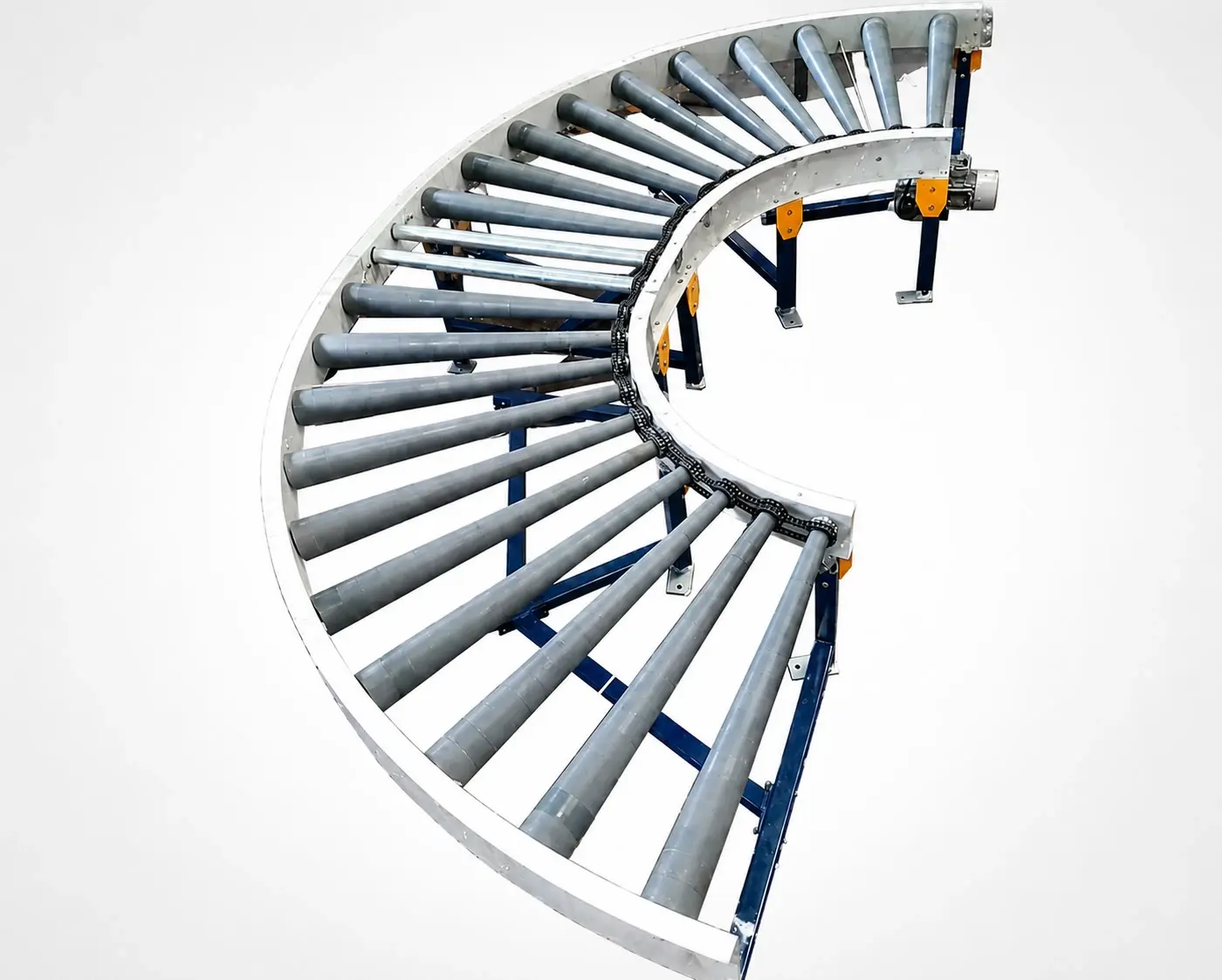
Conveyor Systems Designed for Directional Material Movement
Curve roller conveyors are designed to transfer products through directional changes while maintaining smooth and continuous conveyor movement.
Excel Conveyors manufactures curve conveyor systems engineered for:
- conveyor routing
- directional product movement
- warehouse handling
- packaging line integration
- operational space optimization
- industrial material transfer
across multiple industrial applications.
What are Curve Roller Conveyors?
Curve roller conveyors are conveyor systems designed to change the direction of material movement within conveyor layouts.
These systems are commonly used where conveyor routing requires:
- 45° turns
- 90° turns
- 180° turns
- circular product flow
- directional workflow movement
while maintaining continuous operational transfer.
Curve conveyors help improve:
- operational layout flexibility
- warehouse space utilization
- conveyor integration
- product flow continuity
within industrial handling systems.
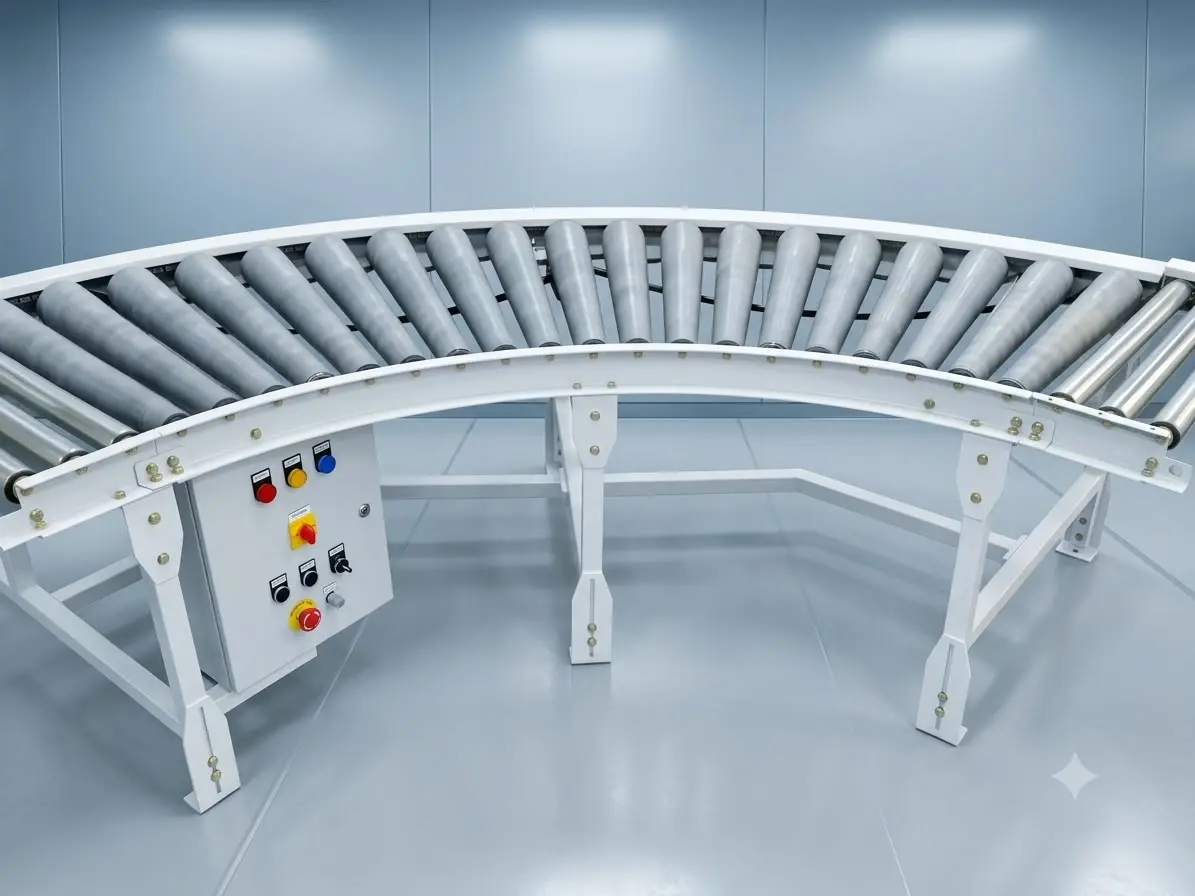
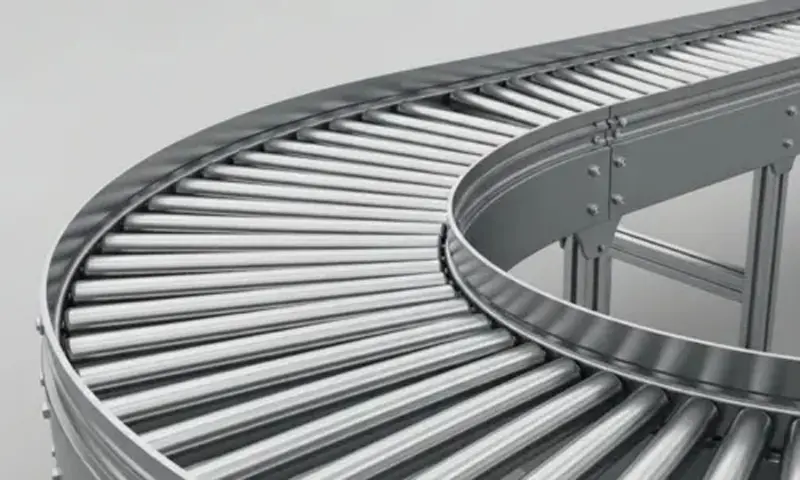
How Curve Roller Conveyor Systems Work
Curve roller conveyors use specially positioned tapered or angled rollers to guide products smoothly through directional changes.
The conveyor structure is designed to maintain:
- product stability
- smooth transfer
- controlled movement
- operational continuity
during curved conveyor routing.
Depending on operational requirements, curve conveyors may operate through:
- gravity roller systems
- powered roller systems
- modular belt systems
- slat conveyor systems
to support different industrial handling applications.
Curve Conveyor Configurations
Gravity Curve Roller Conveyors
Gravity curve conveyors support non-powered directional product movement using conveyor slope and gravity-assisted transfer. (econveyors.in)
- warehouse handling
- carton transfer
- dispatch movement
- packaging lines
Powered Curve Roller Conveyors
Powered curve conveyors support continuous product movement through motorized roller systems. (econveyors.in)
- logistics operations
- industrial transfer
- automated product flow
- packaging systems
Modular Belt Curve Conveyors
Modular curve conveyors support flexible conveyor routing and smooth directional product transfer. (econveyors.in)
- food processing
- packaging lines
- curved layouts
- industrial movement
Slat Curve Conveyors
Slat-type curve conveyors support stable movement of products requiring controlled handling through curved conveyor paths. (econveyors.in)
- assembly lines
- industrial transfer
- bottle movement
- controlled product handling
Common Curve Conveyor Angles
45° Curve Conveyors
Used for mild directional routing within compact layouts.
90° Curve Conveyors
Widely used in warehouse, packaging, and logistics conveyor systems.
180° Curve Conveyors
Used for circular conveyor routing and return line movement.
Custom Conveyor Curves
Designed according to operational layouts and workflow requirements.
Industries Using Curve Conveyor Systems
Warehousing & Logistics
Packaging Operations
E-Commerce Fulfillment
Airport Baggage Handling
FMCG Manufacturing
Food Processing
Pharmaceutical Applications
Dispatch & Sorting Systems
Industrial Product Handling
Applications aligned with existing curve conveyor positioning and operational use-cases. (econveyors.in)
Designed Around Flexible Conveyor Routing
Directional Product Movement
Improved Conveyor Layout Flexibility
Better Space Utilization
Smooth Product Transfer
Continuous Operational Flow
Flexible Conveyor Integration
Stable Material Movement
Adaptable Industrial Applications
Technical Overview
| Conveyor Type | Application | Operational Focus |
|---|---|---|
| Gravity Curve Conveyor | Carton Handling | Directional Transfer |
| Powered Curve Conveyor | Continuous Product Flow | Industrial Movement |
| Modular Curve Conveyor | Flexible Routing | Curved Layout Integration |
| Slat Curve Conveyor | Controlled Handling | Stable Product Transfer |
Frequently Asked Questions
Curve Conveyor Systems Designed for Flexible Industrial Material Movement
Partner with Excel Conveyors for curve roller conveyor systems engineered for smooth directional transfer, operational flexibility, and efficient industrial material handling applications.