
Flexible Roller Conveyor Systems for Adaptive Industrial Material Movement
Excel Conveyors develops flexible roller conveyor systems engineered for dynamic warehouse operations, scalable material transfer, and efficient loading, unloading, dispatch, and logistics workflows across modern industrial environments.
Flexible Conveyor Systems Designed Around Operational Adaptability
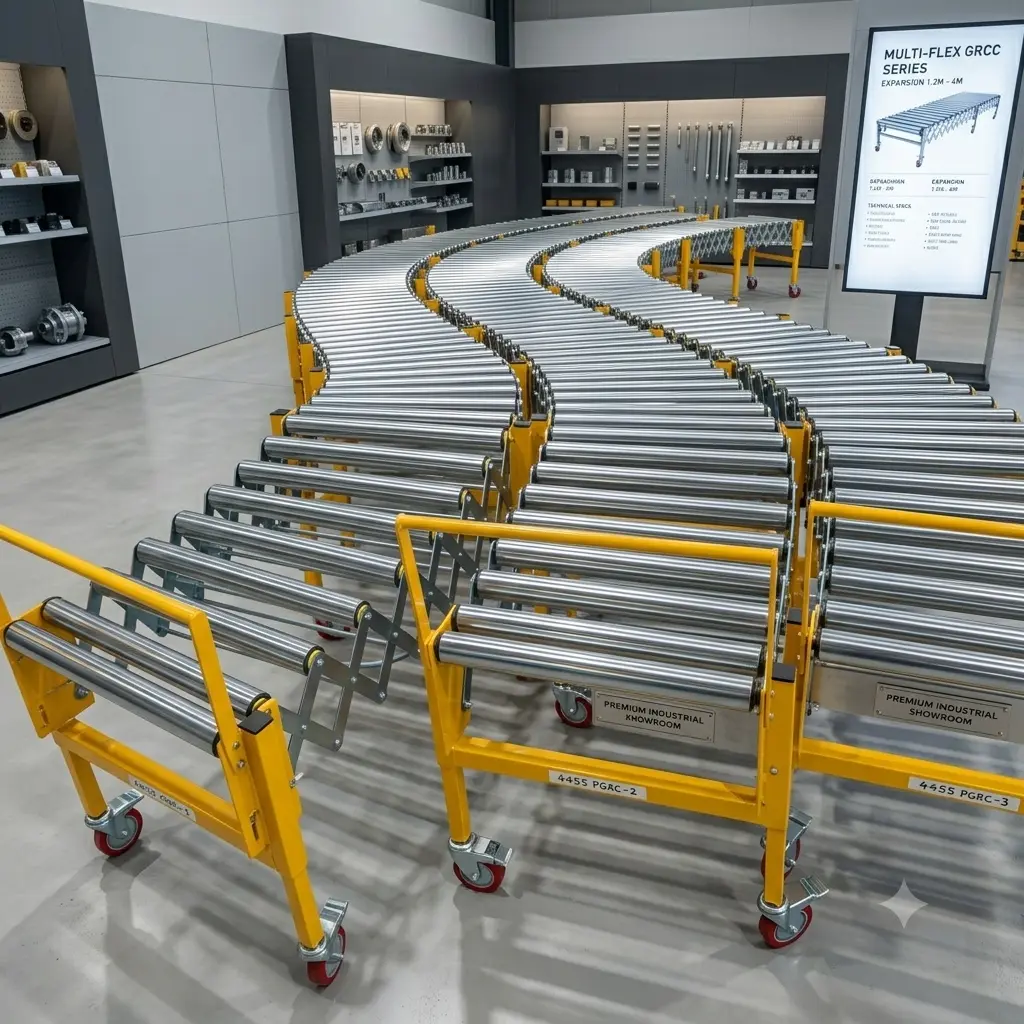
Flexible roller conveyor systems are designed to support adaptable material movement across changing industrial and warehouse environments
Their expandable and portable structure enables efficient:
- loading & unloading
- dispatch movement
- warehouse transfer
- packaging operations
- temporary conveyor setups
- dynamic workflow management
while supporting operational flexibility and optimized material handling efficiency.
See How Flexible Roller Conveyors Work
How Flexible Roller Conveyor Systems Work
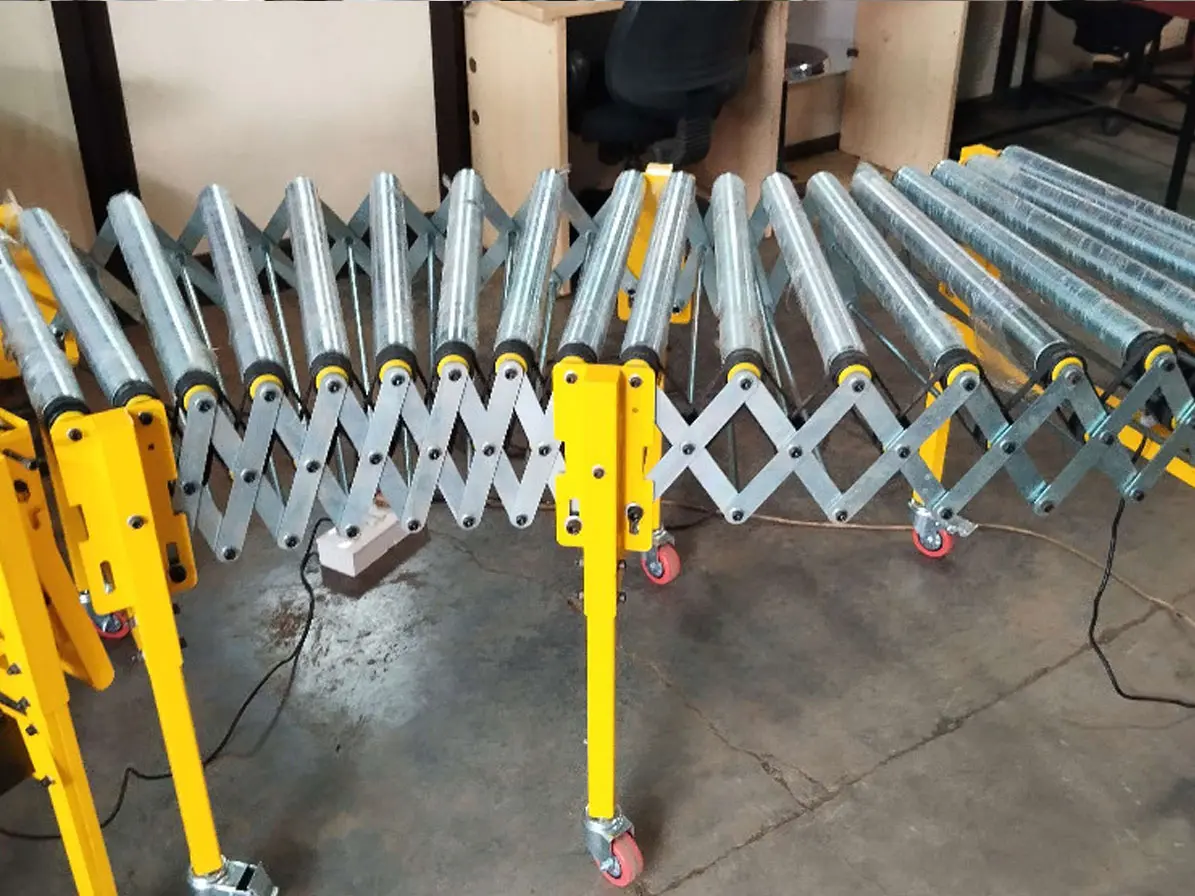
Flexible roller conveyor systems utilize interconnected roller sections mounted on expandable frames that can extend, curve, contract, or reposition based on operational workflow requirements.
These conveyor systems support:
- dynamic routing
- temporary conveyor pathways
- dock-to-warehouse transfer
- space optimization
Depending on operational requirements, systems may operate through:
- gravity-driven movement
- motorized powered transfer
allowing efficient handling of cartons, packages, pallets, and industrial materials.
Built for Modern Warehouse & Logistics Operations
Expandable Conveyor Architecture
Supports adaptable operational layouts and changing workflows.
Portable Conveyor Mobility
Easy repositioning across warehouse and dispatch environments.
Space Optimization
Flexible design supports efficient utilization of operational floor space.
Faster Loading & Unloading
Improves dispatch efficiency and operational movement continuity.
Scalable Workflow Integration
Supports evolving industrial and warehouse infrastructure requirements.
Operational Flexibility
Allows quick adaptation across dynamic material handling environments.
Flexible Conveyor Configurations
Flexible conveyor solutions tailored for adaptive material handling and logistics workflows.
Gravity Flexible Conveyors
Energy-Efficient Material Movement Without External Power
- carton handling
- warehouse transfer
- dispatch areas
- packaging operations
Motorized Flexible Conveyors
Powered Conveyor Movement for Continuous Operational Flow
- e-commerce fulfillment
- logistics hubs
- automated dispatch
- continuous transfer operations
Idler Flexible Conveyors
Smooth Material Transfer for Operational Flexibility
- warehouse handling
- product transfer
- distribution movement
- packaging lines
Powered Flexible Roller Conveyors
Scalable Conveyor Infrastructure for High-Throughput Operations
- automated logistics
- throughput optimization
- fulfillment centers
- industrial transfer systems
Flexible Conveyor Configuration Options
Choose from modular run lengths, adjustable widths, and operational systems tailored for your workflow.
Conveyor Length & Width
Modular section design enables variable conveyor lengths. Expandable width frames support changing package sizes and flow pathways without structural rework.
Roller Material & Diameter
Select roller materials and diameters suited to carton, parcel, and pallet handling. Options range from light-duty smooth rollers to heavy-duty impact-resistant tubes.
Load Capacity & Height Adjustment
Engineered for defined payload ratings while providing adjustable frame heights to align with dock, pallet, or packaging station elevations.
Operation, Mobility & Routing
Choose gravity or motorized transfer, mobile wheel systems, and curved routing for optimized dock-to-warehouse workflows and dynamic route changes.
Flexible Conveyor Applications
Deploy flexible conveyor systems across diverse operational workflows for faster material movement and better adaptability.
Warehouse Operations
Supports adaptable carton and package movement.
Logistics & Distribution Centers
Improves dispatch and transfer efficiency across operational workflows.
E-Commerce Fulfillment
Scalable conveyor infrastructure for high-volume order movement.
Packaging Operations
Flexible material transfer across packaging and sorting environments.
Loading & Unloading Zones
Supports efficient truck loading and unloading workflows.
Temporary Conveyor Pathways
Portable conveyor systems for evolving operational layouts.
Manufacturing Transfer Operations
Adaptable movement infrastructure across industrial production environments.
Courier & Parcel Operations
Supports fast-paced parcel movement and dispatch management.
Designed Around Operational Efficiency & Workflow Agility
Reduced Manual Handling
Minimizes manual effort across loading, unloading, and transfer zones.
Faster Dispatch Operations
Speeds up dispatch workflows by keeping product flow continuous and predictable.
Improved Material Flow
Optimizes product sequencing and reduces congestion in busy zones.
Dynamic Workflow Management
Allows quick reconfiguration to match shifting operational demands.
Flexible Conveyor Routing
Supports curved and variable routing for complex dock and floor layouts.
Efficient Warehouse Movement
Enhances warehouse throughput with adaptable conveyors that match real-time flow patterns.
Flexible Conveyor System Planning Considerations
Selecting the right flexible conveyor system depends on several operational and workflow factors, including:
- product dimensions
- load weight
- throughput requirements
- warehouse layout
- movement frequency
- conveyor routing
- operational flexibility
- loading dock infrastructure
Proper system planning helps improve workflow continuity, movement efficiency, dispatch speed, warehouse scalability, and operational adaptability.
Flexible Conveyor System Planning Considerations
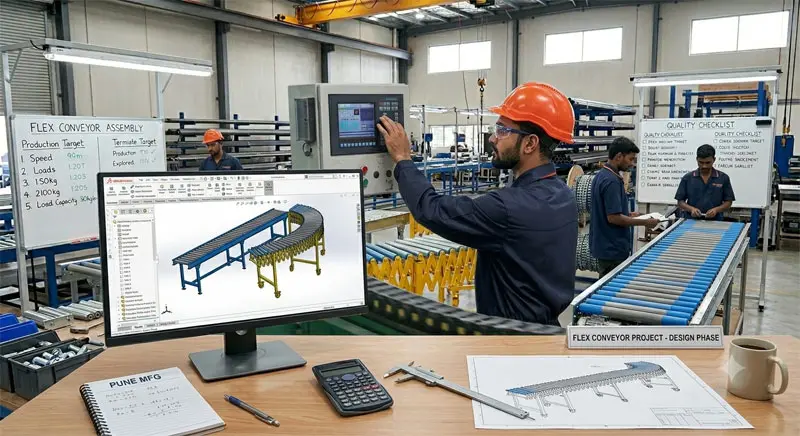
While flexible conveyor systems are inherently adaptable and efficient, careful planning ensures they match your logistics and industrial workflow needs.
- Product dimensions: define frame extensions and curve radii to prevent pinch points.
- Load weight: sets roller size, frame strength, and support spacing requirements.
- Throughput requirements: determines whether gravity or motorized transfer is best suited.
- Warehouse layout: influences routing options and temporary conveyor placement flexibility.
- Transfer distance: impacts wheel system selection, incline design, and operational speed control.
Technical Matrix Overview
Quick reference model capabilities for plant integration analysis.
| Conveyor Type | Operational Mode | Application | Workflow Focus |
|---|---|---|---|
| Gravity Flexible Conveyor | Gravity Movement | Warehousing | Manual Transfer |
| Motorized Flexible Conveyor | Powered Transfer | Logistics | Continuous Flow |
| Idler Flexible Conveyor | Low Resistance Transfer | Packaging | Smooth Movement |
| Powered Roller Conveyor | Automated Workflow | E-Commerce | Throughput Optimization |
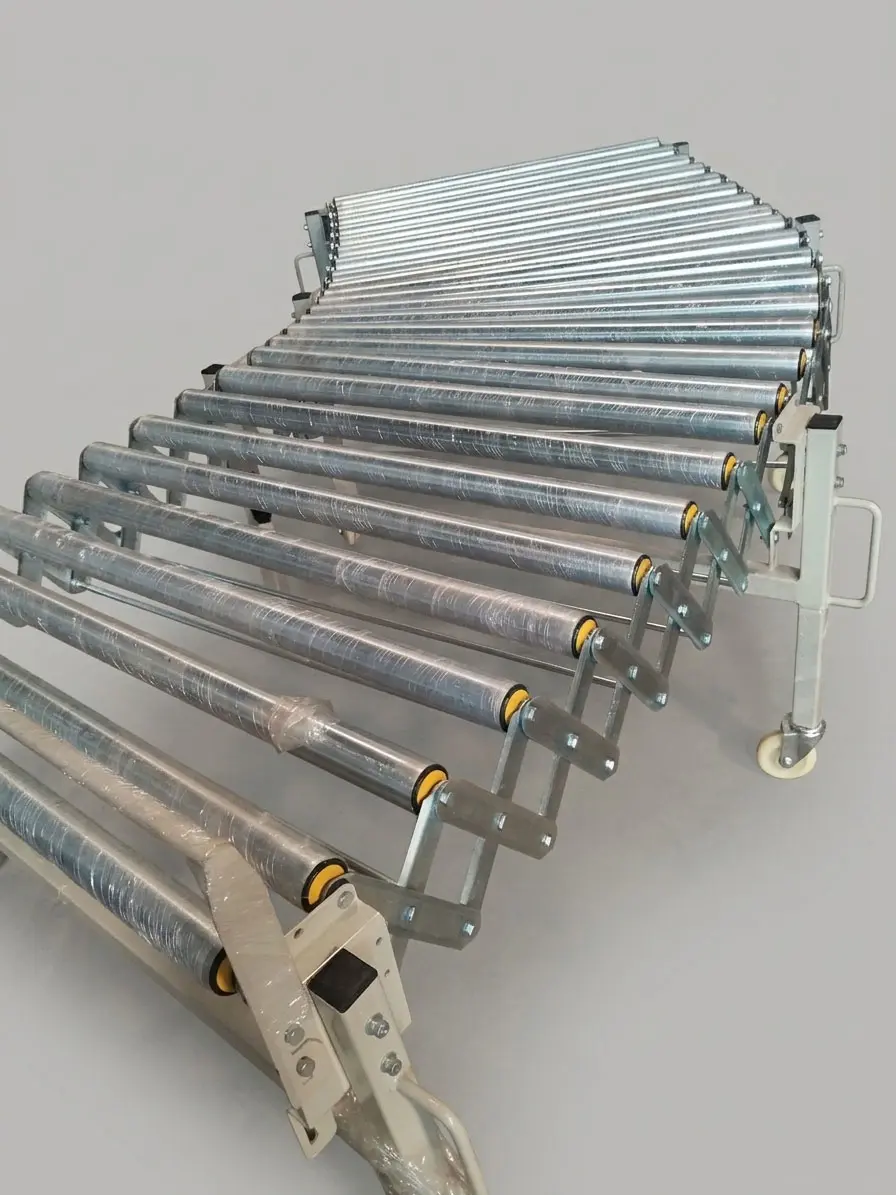
Conveyor Systems Built Around Industrial Workflow Requirements
Excel Conveyors develops flexible conveyor systems focused on operational adaptability, conveyor reliability, modular infrastructure, scalable warehouse movement, industrial durability, and workflow optimization aligned with modern logistics and industrial handling environments.
- operational adaptability
- conveyor reliability
- modular infrastructure
- scalable warehouse movement
- industrial durability
- workflow optimization