

Flat Belt Conveyor Systems for Efficient Industrial Material Handling
Excel Conveyors manufactures flat belt conveyor systems designed for smooth product movement, reliable operational flow, and adaptable material handling across packaging, warehousing, manufacturing, logistics, and industrial applications.
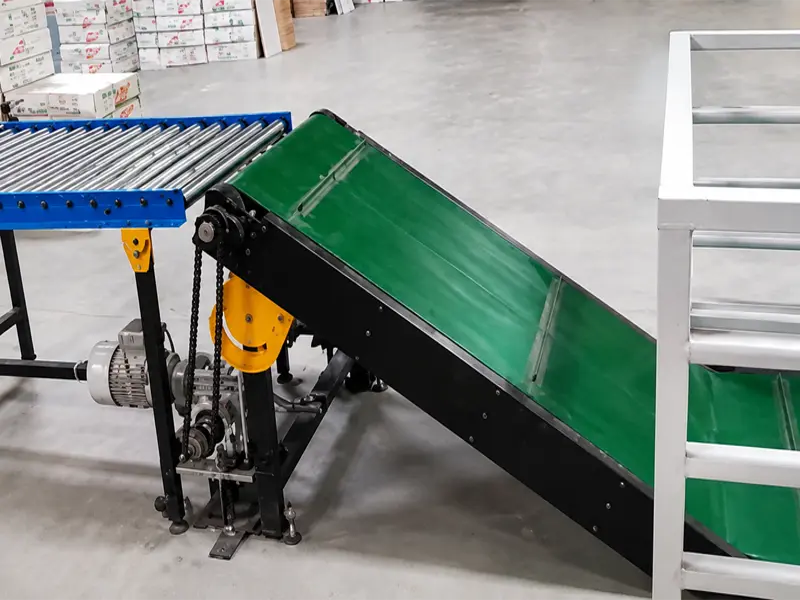
Flat Belt Conveyors Designed for Reliable Product Movement
Flat belt conveyors are among the most widely used conveyor systems for industrial material handling and factory movement applications.
Excel Conveyors manufactures flat belt conveyor systems engineered for:
- Smooth material transfer across operational cells.
- Operational continuity with minimized blockages.
- Packaging movement handling sequential operations.
- Warehouse handling of boxes, totes, and units.
- Inclined transfer applications for multi-level systems.
- Industrial product flow optimization across manufacturing lines.
See How Flat Belt Conveyors Work
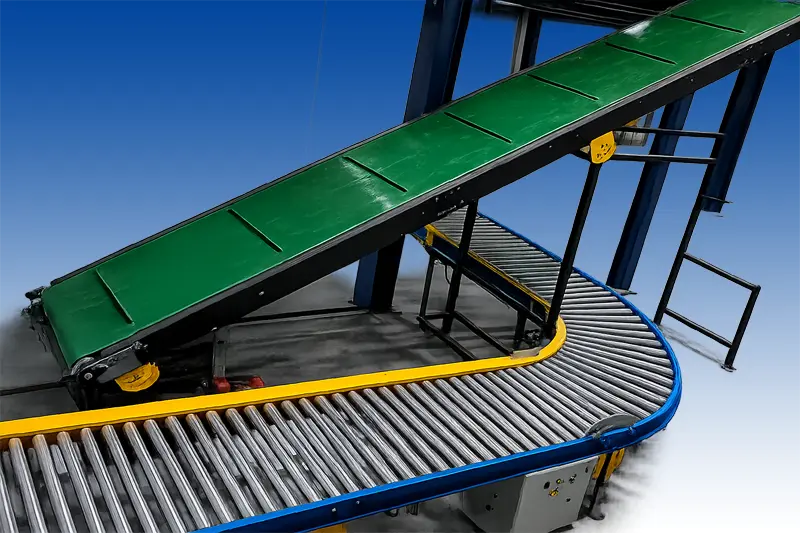
How Flat Belt Conveyor Systems Work
Flat belt conveyors operate through friction between the conveyor belt and drive roller. The drive end roller is connected to a motor system that rotates the belt and enables continuous product movement. The opposite side acts as the driven or tension end.
Proper belt tension and belt tracking are critical for smooth conveyor operation and stable material transfer. If belt tension is insufficient, conveyor movement becomes unstable and operational performance may be affected.
System Visualization Core Components:
- Belt tracking animation parameters for standard drift correction.
- Drive & driven roller visualization highlighting tension profiles.
- Inclined conveyor movement physics under variable loads.
- Friction-based movement illustration mapping traction distribution.
Features of Excel Flat Belt Conveyors
Rigid & Sturdy Construction
Designed for industrial durability and stable conveyor performance under heavy, continuous cyclic loads.
Welded & Bolted Structure
Provides exceptional structural integrity, structural alignment retention, and long-term conveyor reliability.
Centre-Guided Belt Design
Supports minimum belt tracking adjustments and smoother conveyor operation with self-centering mechanical tracks.
Easy Maintenance
Designed for simplified operational maintenance, structural openness, and drastically reduced operational downtime.
Flat Belt Conveyor Applications & Configurations
Inclined Belt Conveyors
Inclined flat belt conveyors are used for floor-to-floor movement, truck loading operations, warehouse transfer, carton handling, plastic crate movement, and industrial product transfer applications.
- Inclination limits: maintained strictly around 25° for slip mitigation.
- Product compatibility: suitable for cartons, bags, totes, and crates.
- Operational focus: intensive multi-tier warehouse material movement.
Mini Belt Conveyors
Mini belt conveyors are compact conveyor systems with widths starting from approximately 30mm and are suitable for small-space industrial applications requiring precision control.
- Electronics: PCB transfers, sorting setups, and soldering line feeds.
- Small components: industrial fasteners, sub-assemblies, and injection molds.
- Specialized uses: pharmaceuticals, seed counting lines, and press machine outflows.
Packing Conveyors
Packing conveyors support product packing workflows where operators perform sequential manual or semi-automated packaging operations along continuous conveyor lines.
- Assembly tasks: carton packing, box scaling, and multi-product batching.
- Sectors: high-volume FMCG processing, bakery operations, and food packaging.
- Ergonomics: optimized for integrated manual packing side-bench stations.
Checkweigher Conveyors
Checkweigher conveyors are engineered to precisely measure product mass during dynamic conveyor movement without interrupting standard operational velocity profiles.
- Automation: real-time weighing with high-frequency feedback tracking loops.
- Sorting options: high-speed downstream automated packaging line integration.
- Rejection units: inline pneumatic reject systems for out-of-spec products.
Knife Edge Belt Conveyors
Knife-edge conveyors are designed for handling ultra-tiny products where standard mechanical gaps between transfers could lead to component tipping, jamming, or structural loss.
- Key Benefit: Supports smooth, continuous horizontal transfers of microscopic components.
- Transitions: Eliminates wide nose-roller gaps between consecutive conveyor junctions.
Food Grade Belt Conveyors
Food-grade conveyor systems utilize non-toxic, anti-microbial belt materials and open washdown structures specifically designed for strict hygiene-sensitive industrial environments.
- Target Sectors: Raw food sorting, commercial bakery lines, and dairy processing.
- Material Standard: FDA-approved PU/PVC structures built to withstand chemical sanitization.
Cleated & Sidewall Belt Conveyors
Cleats and integrated profile sidewalls are utilized mechanically to guarantee product placement tracking during high-angle elevation changes and steep positioning operations.
- Fabrication: Ultrasonically welded profile cleats for long-lasting adhesion.
- Physics: Prevents materials from sliding back down steep vertical climbs.
Telescopic Conveyors
Telescopic conveyors feature an adjustable length design widely deployed to optimize labor utilization inside loading docks, cross-docks, and container hubs.
- Ergonomics: Smooth, variable mechanical extensions directly into trailer beds.
- Flexibility: Mobile or floor-anchored configurations tailored to the terminal floor.
Metal Detector Conveyors
These specialized systems combine high-tensile tracking frames with precise electromagnetic search coils to protect consumer pipelines from metallic contaminants.
- Applications: Packaged foods processing, pharmaceuticals, and bulk chemical inspection.
- Actions: Instantly signals downstream pneumatic pusher bars or sounds automated alarms.
Belt Over Roller Conveyors
Belt over roller conveyors position low-friction roller beds directly beneath a high-strength belt, combining continuous support with reduced mechanical resistance.
- Efficiency: Drastically lowers motor power and torque requirements under heavy loads.
- Load profile: Ideal for irregular medium-weight cartons and long-distance paths.
Industries Using Flat Belt Conveyor Systems
FMCG Packaging
Food & Bakery Operations
Dairy Processing
Warehouse Handling
Logistics & Dispatch
Pharmaceutical Applications
Carton Box Movement
Plastic Crate Transfer
Industrial Manufacturing
Parcel & Sorting Operations
Conveyor Belt Material Options
PVC Belts
Widely used across general-purpose industrial conveyor applications for robust wear and tracking stability.
Food Grade Belts
Polyurethane (PU) options suitable for hygienic food contact, chemical washdowns, and medical applications.
Cleated Belts
Features integrated cross-rigid vertical profiles to support stable, slip-free inclined material movement.
Sidewall Belts
Includes flexible corrugated borders to ensure controlled, spill-free product movement and cross-axis alignment.
Designed Around Reliable Conveyor Performance
Smooth Product Transfer
Eliminates jostling or structural vibrations to keep delicate components safely balanced during transport loops.
Reduced Manual Handling
Automates repetitive end-to-end transport workflows, lowering product damage risks and manual error profiles.
Compact Conveyor Design
Low structural profiles allow for seamless integration into tight, crowded industrial floorplans.
Flexible Industrial Applications
Easily adapted for inline weighing, automated code sorting, sorting bins, and heavy packaging configurations.
Belt Conveyor Design Considerations
Critical Assessment Inputs:
- Product dimensions & orientation: dictates belt span limits.
- Product weight & distribution: influences tracking tension levels.
- Conveyor length & structural routing: impacts drive torque targets.
- Incline angle profiles: checks if cleat profiles are required.
Expected Yield Goals:
- Movement efficiency: maximizes throughout while minimizing power draw.
- Belt tracking stability: prevents side edge wear and structural tracking loss.
- Operational reliability: eliminates mechanical failures during extended runs.
- Workflow continuity: ensures smooth transitions between production processes.
Technical Overview
| Conveyor Type | Application | Operational Focus |
|---|---|---|
| Inclined Belt Conveyor | Floor Transfer | Inclined Movement |
| Mini Belt Conveyor | Small Components | Compact Handling |
| Packing Conveyor | Packaging Operations | Workflow Efficiency |
| Checkweigher Conveyor | Weight Inspection | Packaging Validation |
| Telescopic Conveyor | Truck Loading | Loading & Unloading |
Frequently Asked Questions
Flat Belt Conveyor Systems Designed for Reliable Industrial Movement
Partner with Excel Conveyors for flat belt conveyor systems engineered for smooth product transfer, operational continuity, and adaptable industrial material handling applications.