

Gravity Roller Conveyor Systems Engineered for Efficient Industrial Material Flow
Excel Conveyors develops gravity roller conveyor systems designed to support smooth material transfer, workflow continuity, and energy-efficient industrial movement across warehousing, packaging, manufacturing, and logistics environments.
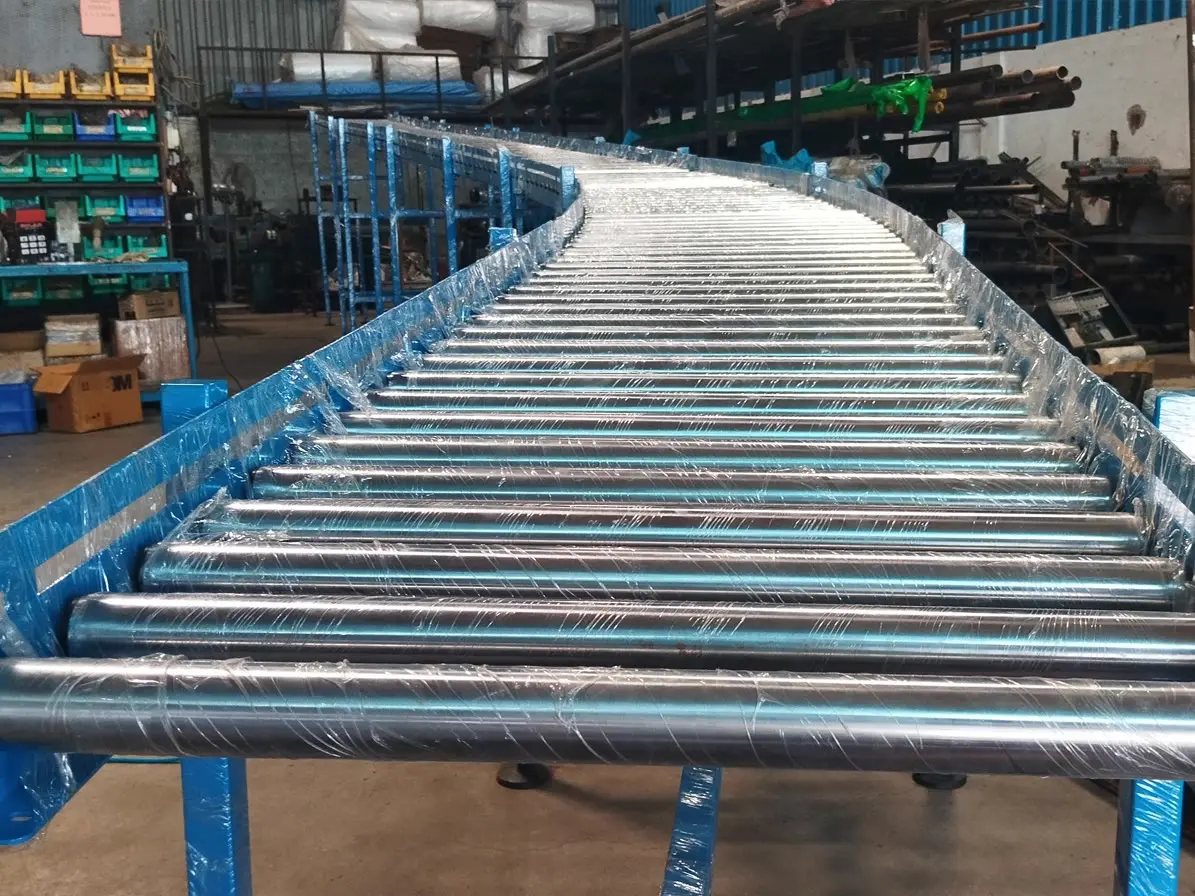
Simple, Reliable & Energy-Efficient Conveyor Movement
Gravity roller conveyor systems are among the most widely used material handling solutions across industrial environments due to their operational simplicity, low maintenance requirements, and efficient product transfer capabilities. Designed to utilize gravity-driven movement, these conveyor systems support:
- Smooth material flow and lower physical fatigue
- Enhanced operational efficiency inside picking modules
- Reduced manual handling interventions across floors
- Scalable warehouse movement architectures
- Completely unpowered, low-energy daily operations
- Continuous workflow continuity through buffer staging fields
See How Gravity Roller Conveyors Work
How Gravity Roller Conveyor Systems Work
Gravity roller conveyor systems operate using the natural force of gravity to move products across rollers without requiring external power sources.
Products are placed on rollers positioned either on a slight incline OR through manual push movement, allowing cartons, packages, pallets, and industrial materials to move efficiently along the conveyor path.
The movement efficiency depends on multiple functional conditions:
- Product weight and external structural load properties
- Conveyor frame alignment decline angle configurations
- Roller pitch configuration spacing matched to product bases
- Product bottom surface texture and rigidity compatibility
- Local environmental constraints and handling load dynamics
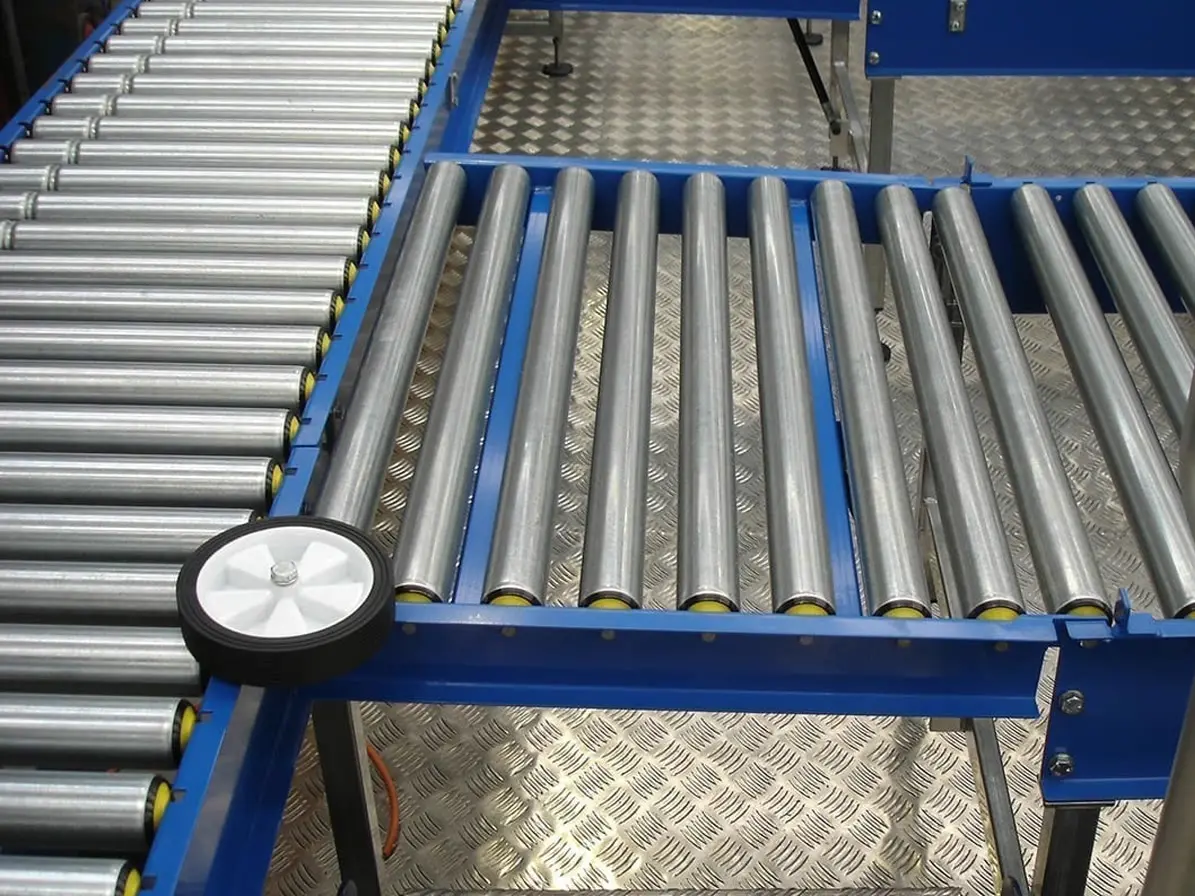
Why Gravity Roller Conveyors Continue to Power Modern Industrial Operations
No External Power Requirement
Supports reliable structural material movement completely independent of motors, gearboxes, or complex electrical infrastructure setups.
Energy-Efficient Operations
Directly assists in lowering daily facility operational energy consumption footprints alongside related warehouse infrastructure utility expenses.
Low Maintenance Requirements
Highly simplified architecture reduces moving breakdown parts to a minimum, ensuring long-term continuous system reliability.
Flexible Industrial Applications
Universally applicable across demanding warehousing fulfillment centers, packing benches, heavy dispatch docks, assembly hubs, and fluid buffer zones.
Cost-Effective Material Handling
Delivers an optimized material flow cost-to-benefit profile for facilities seeking strategic layout upgrades without explosive capital spending.
Scalable Conveyor Integration
Engineered for effortless module connection, allowing simple daisy-chain additions into broader complex conveyor lines and advanced sortation loops.
Gravity Roller Configurations
Technical options tailored around package load properties and specialized environmental conditions.
Type 120 Gravity Rollers
Operational Focus: Designed for light and medium-duty material handling layouts.
- Carton handling lines
- Totes & box transfers
- Sorting line workbenches
- End-of-line packaging lines
Type 130 Gravity Rollers
Operational Focus: Optimized for industrial workflows with heavy-duty operational loads.
- Pallet sorting runs
- Factory manufacturing
- Logistics distribution
- Heavy machinery transfer
PVC Gravity Rollers
Operational Focus: Highly lightweight, clean-running, rustproof, and corrosion-resistant roller alternative.
- Moisture-heavy hubs
- Lightweight courier parcels
- Sanitary/hygienic lines
- Chemical testing cells
Heavy Duty Gravity Rollers
Operational Focus: Robustly structured for ultra-demanding daily continuous factory output demands.
- Heavy automotive parts
- Bulk pallet logistics
- Terminal dispatch yards
- High-load staging racks
Gravity Roller Conveyor Applications
Deploying energy-efficient material tracking modules across key commercial touchpoints.
Warehouse Material Movement
Speeds up daily case flow routing setups during bulk multi-item transfers across wide production corridors.
Packaging Operations
Safeguards clean, continuous parcel transitions from automated taping setups direct to dispatch staff queues.
Assembly Line Transfer
Optimizes cross-docking workflow sequences during heavy manual factory floor product assembly stages.
Vehicle Loading & Unloading
Greatly accelerates fluid cargo unstacking from trucks inside tight terminal cross-dock environments.
FIFO / LIFO Storage Systems
Maintains structured inventory flow rotation layouts within deep-lane storage system cells.
Live Storage Rack Integration
Utilizes constant, safe gravity tracking runs inside dense inventory warehouse racking channels.
Pallet Handling Applications
Manages heavy wooden or plastic industrial pallet movements across heavy transfer zones safely without power draws.
Distribution & Logistics Operations
Boosts daily shipping sortation throughput volumes within large-scale hub networks.
Gravity Conveyor Design Considerations
Selecting the right gravity roller conveyor system depends on several operational and workflow factors, including:
- Total maximum weight limits per single package run
- Required overall conveyor segment footprint length limits
- Precise roller center spacing alignment to prevent product stalling
- Flatness and bottom surface style of materials being handled
- Safe downhill frame incline pitch angles tailored to product loads
- Expected movement travel speed constraints under maximum weights
- Product orientation and general load balance profiles
- Environmental floor variables (humidity, dust, chemical tracking)
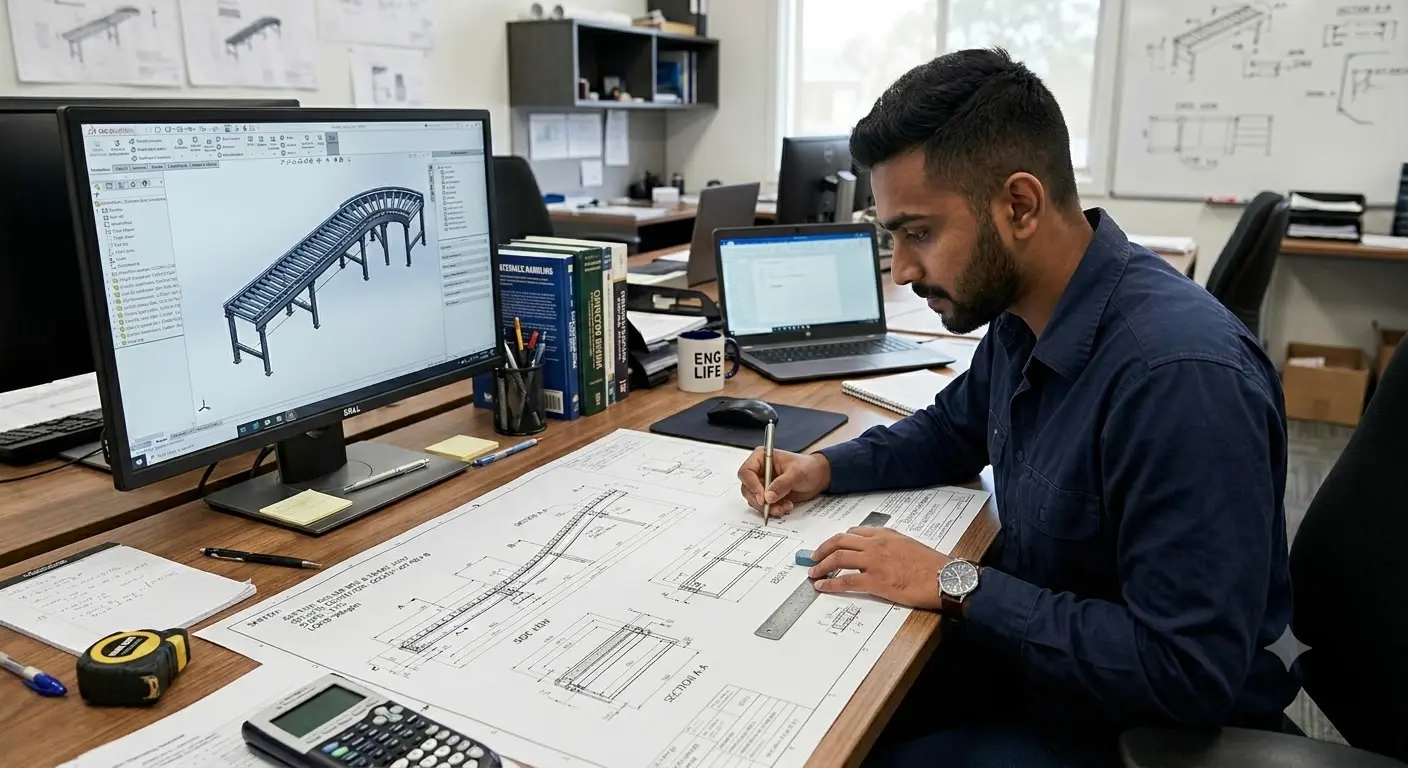
Designed Around Reliable Workflow Performance
Smooth Material Flow
Maintains highly predictable operational process speeds by avoiding jagged, uneven manual transitions between line machinery.
Reduced Manual Handling
Directly shields workers from fatigue by limiting physical pushing lifting needs across long floor distances.
Lower Operational Costs
Leverages natural gravitational force to run non-stop, guaranteeing massive ongoing warehouse electrical savings.
Flexible System Integration
Pairs smoothly into dynamic layouts alongside motorized belts, accumulating modules, or pneumatic lift stations.
Operational Simplicity
Minimal complex training needed for lineside warehouse staff, streamlining onboarding across high-turnover logistics shifts.
Reliable Industrial Performance
Engineered with rugged raw components selected deliberately to survive continuous shifts without breakdown disruptions.
Technical Matrix Overview
Quick reference model capabilities for plant integration analysis.
| Conveyor Type | Operational Focus | Load Environment | Application |
|---|---|---|---|
| Type 120 Rollers | Medium-Duty Material Transfer | Light / Medium Packages | Packaging Lines & Staging Warehouses |
| Type 130 Rollers | Industrial Movement Runs | Medium / Heavy Payloads | Manufacturing Assembly & Logistics Docks |
| PVC Rollers | Lightweight Washdown Movement | Light Corrosive Items | Moisture-Prone Environments |
| Heavy Duty Rollers | High Throughput Indexing | Heavy Structural Loads | Industrial Heavy Material Handling Blocks |
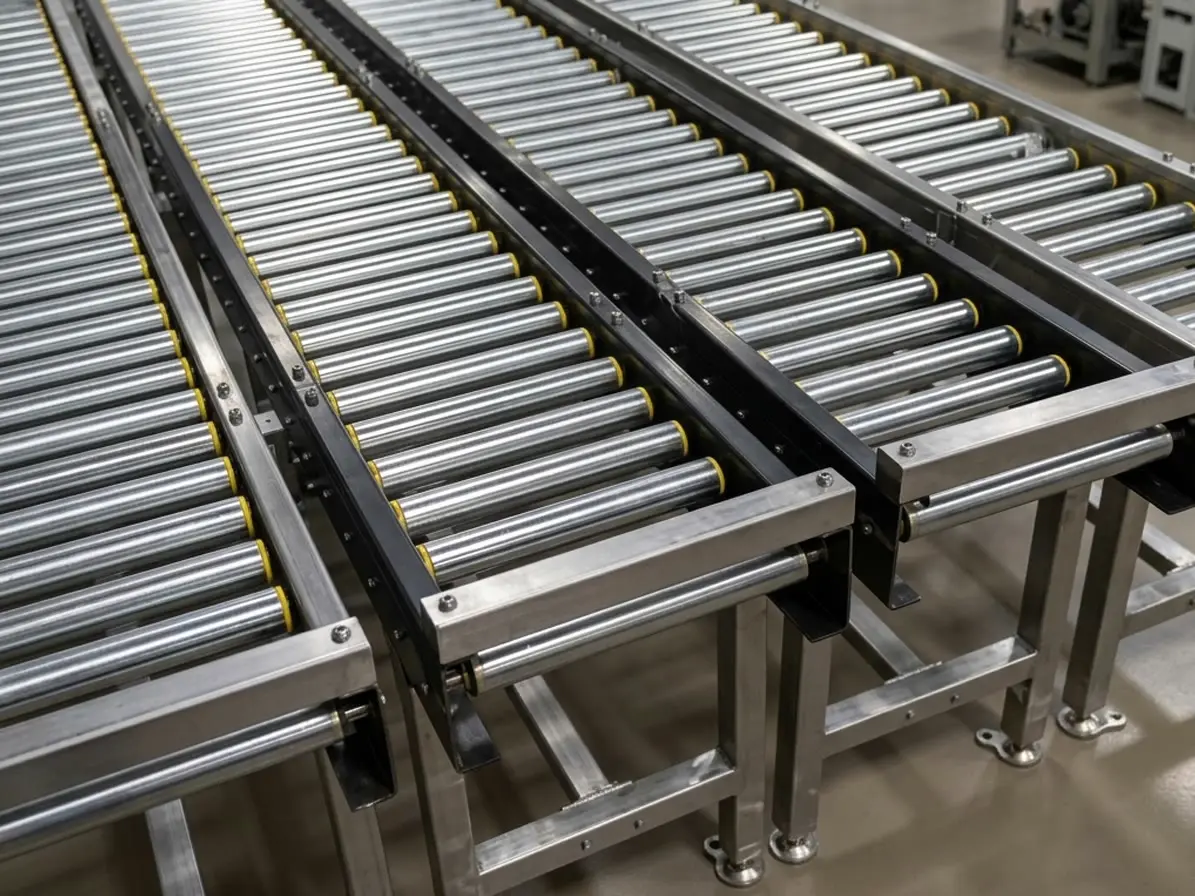
Precision Conveyor Manufacturing Infrastructure
Excel Conveyors supports conveyor manufacturing through operationally structured fabrication processes focused on delivering commercial structural integrity. Our advanced manufacturing facility remains strictly optimized toward ensuring:
- Conveyor frame dimensional consistency across wide production volumes
- Flawless precision bearing and roller integration tolerances
- High industrial durability against rough daily impact shocks
- Absolute material movement reliability beneath max-capacity weights
- Workflow optimization aligned with modern floor layout configurations
- Scalable conveyor infrastructure matching future industrial expansion needs