

Conveyor Design Calculators Tools
Excel Conveyors provides conveyor engineering calculators and utility tools designed to simplify repetitive design calculations for conveyor systems, roller selection, gearbox ratio estimation, and conveyor speed planning.
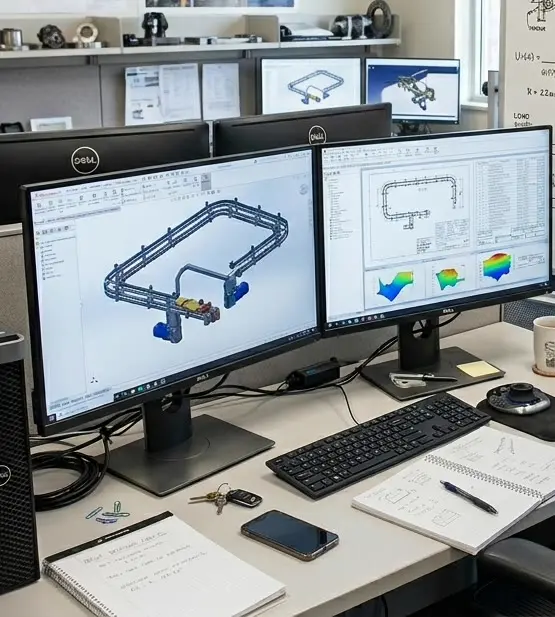
Engineering Utilities Designed to Simplify Conveyor Design Calculations
Conveyor system design often requires repetitive engineering calculations related to:
- roller load capacity
- conveyor speed
- gearbox ratios
- roller pitch
- motor RPM selection
- conveyor drive configuration
Excel Conveyors provides practical engineering calculator tools to assist conveyor designers, plant engineers, and material handling professionals during preliminary conveyor planning and system selection.
Available Conveyor Design Calculators
Roller Load Calculator
Calculate roller pitch and roller load carrying requirements for conveyor systems based on operational load distribution.
Gearbox Ratio Calculator
Calculate gearbox ratio and conveyor speed requirements for roller conveyor systems based on roller diameter, motor RPM, and operational speed requirements.
Conveyor Speed Calculator
Estimate conveyor speed configurations based on roller diameter and drive arrangement requirements.
Roller Conveyor Calculator
Belt Conveyor Calculator
Gearbox Ratio Calculator
Designed for Conveyor Engineers & Industrial Design Teams
Typical Conveyor Design Workflow
Step 1: Define Conveyor Speed
Determine required operational throughput and conveyor movement speed.
Step 2: Select Roller Diameter
Choose roller dimensions according to product size and load handling requirements.
Step 3: Calculate Gearbox Ratio
Estimate gearbox configuration required to achieve desired conveyor speed.
Step 4: Determine Roller Pitch
Calculate roller spacing based on product dimensions and load distribution.
Step 5: Validate Operational Movement
Review conveyor performance and material transfer continuity.
Applications of Conveyor Design Calculators
Engineering Calculation Disclaimer
The conveyor design calculators provided are intended for preliminary engineering assistance and informational purposes only.
Calculation results should be independently verified before final implementation or equipment selection.
Final conveyor design decisions should consider:
- application conditions
- industrial standards
- operational requirements
- engineering validation
- equipment specifications
Users are encouraged to consult qualified professionals wherever necessary.
Frequently Asked Questions
Practical Conveyor Design Tools for Industrial Engineering Applications
Partner with Excel Conveyors for conveyor engineering support, industrial material handling expertise, and practical conveyor design calculation assistance.