

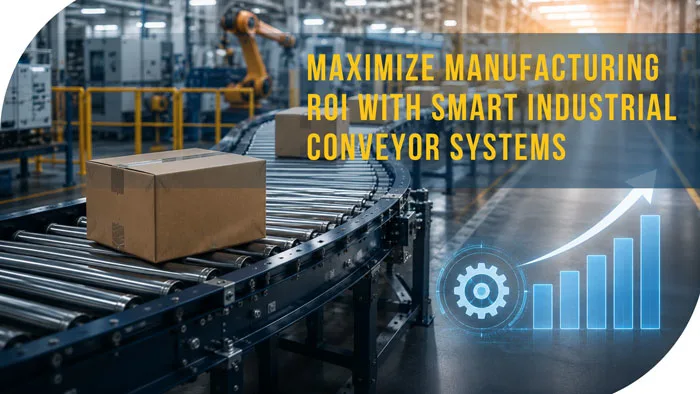
ROI of Investing in Industrial Conveyor Systems
In today's competitive manufacturing environment, every capital investment must deliver measurable business value. Among the most impactful investments is an industrial conveyor system, which streamlines material movement, improves operational efficiency, and minimizes production bottlenecks. While the initial investment may appear significant, the long-term benefits make conveyor systems one of the smartest decisions for manufacturers aiming to improve profitability.
This article explores how investing in industrial conveyor systems generates a strong return on investment (ROI) through improved productivity, reduced operating costs, enhanced workplace safety, and sustainable business growth.
Understanding ROI in Conveyor System Investments
Return on Investment (ROI) measures the financial gains achieved compared to the investment made. When evaluating a conveyor system investment, manufacturers should consider both direct and indirect savings.
Key ROI Factors Include:
- Reduced labor costs
- Faster material movement
- Increased production output
- Lower product damage
- Improved workplace safety
- Reduced equipment downtime
Rather than viewing conveyor systems as an expense, businesses should see them as a long-term productivity asset.
How Industrial Conveyor Systems Improve ROI
1. Increased Productivity
One of the biggest contributors to ROI is improved production efficiency. Automated material movement eliminates unnecessary manual handling, allowing products to move seamlessly between workstations.
Benefits include:
- Faster production cycles
- Reduced bottlenecks
- Continuous workflow
- Higher daily output
The result is increased production capacity without significantly expanding the workforce.
2. Lower Operating Costs
Manual material handling often involves higher labor expenses and operational inefficiencies. Industrial conveyor systems automate repetitive tasks, reducing dependency on manual labor while lowering operational costs.
Businesses benefit from:
- Lower labor expenses
- Reduced overtime
- Efficient resource utilization
- Consistent production performance
These savings accumulate significantly over the life of the conveyor system.
3. Improved Workplace Safety
Moving heavy materials manually increases the risk of workplace injuries. Conveyor systems minimize manual lifting, helping create a safer work environment.
Advantages include:
- Reduced employee fatigue
- Fewer workplace accidents
- Lower compensation claims
- Better compliance with industrial safety standards
A safer workplace contributes to both employee satisfaction and financial savings.
Better Product Quality and Reduced Waste
Consistent and controlled product movement minimizes damage during transportation across the production floor.
This results in:
- Lower product rejection rates
- Reduced material waste
- Improved customer satisfaction
- Better product consistency
Less waste directly contributes to higher profitability and improved ROI.
Long-Term Business Growth
Modern material handling solutions are scalable and can adapt to increasing production demands. As businesses expand, conveyor systems can often be modified or extended without replacing the entire infrastructure.
Long-term advantages include:
- Easy production expansion
- Better inventory flow
- Improved warehouse efficiency
- Enhanced operational visibility
- Support for future automation initiatives
This flexibility protects the original investment while supporting sustainable growth.
Why Manufacturers Choose Excel Conveyors
At Excel Conveyors, we design and manufacture reliable industrial conveyor systems tailored to diverse manufacturing requirements. Our solutions help businesses improve operational efficiency, optimize material flow, and maximize long-term returns on investment.
Whether you're upgrading an existing production line or implementing a new automation strategy, choosing the right conveyor solution can significantly improve your manufacturing performance.
Conclusion
Investing in industrial conveyor systems is more than purchasing equipment—it's investing in greater efficiency, lower operating costs, improved workplace safety, and sustainable business growth. When evaluated over the long term, conveyor systems consistently deliver measurable ROI by increasing productivity and reducing operational challenges.
Manufacturers seeking greater operational excellence should consider conveyor automation as a strategic investment that continues to generate value for years to come.