

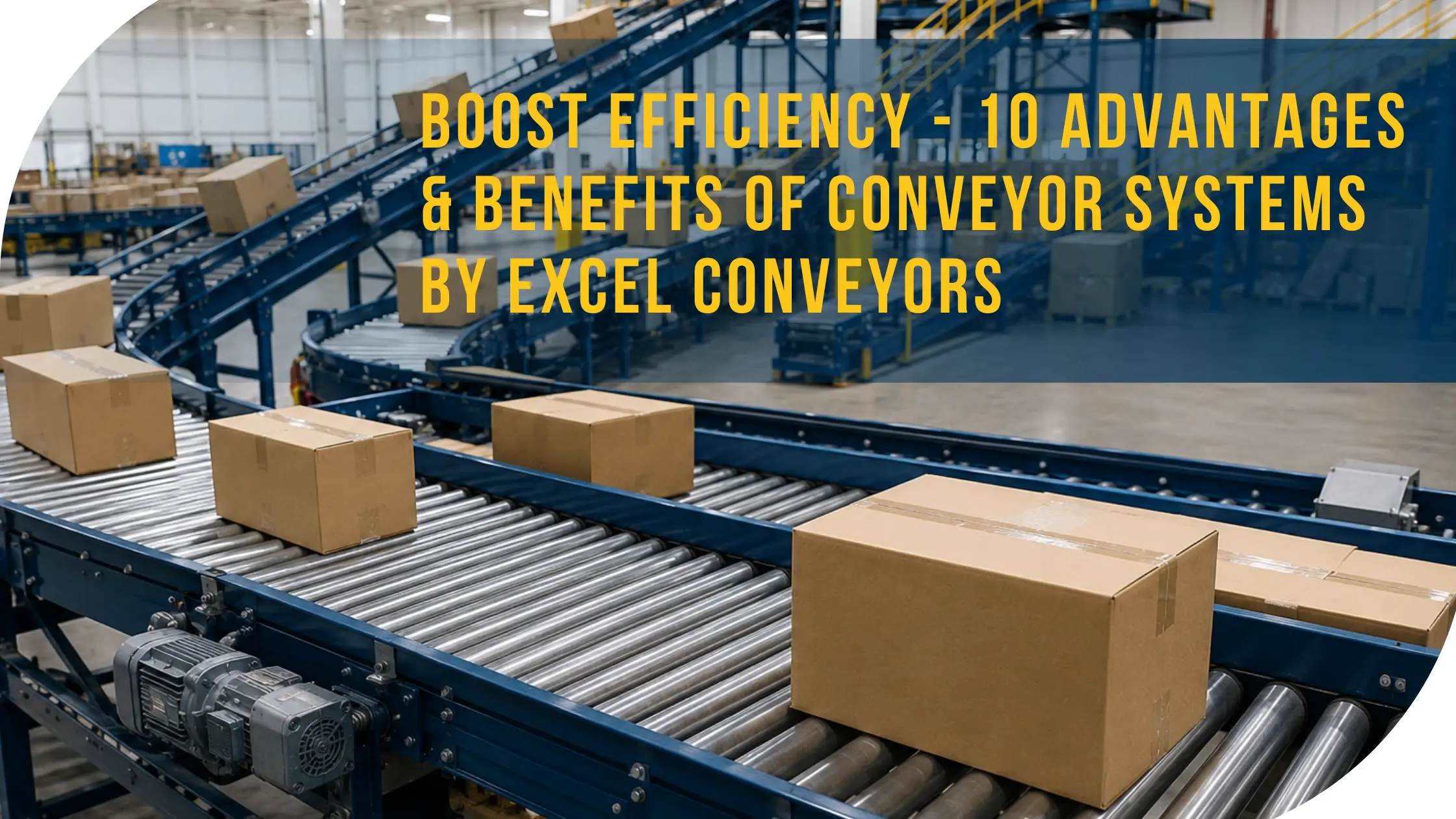
Boost Efficiency - 10 Advantages & Benefits of Conveyor Systems
Business owners often overlook the myriad benefits of conveyor systems, perhaps due to concerns about initial investments. In this article, we unravel the 10 advantages and benefits of conveyor systems, shedding light on how they can positively impact your operations.
What is a Conveyor System?
Conveyors, at their core, facilitate the movement of materials from point A to point B. While this concept has deep historical roots, modern conveyors integrate advanced technologies such as PLCs and sensors, extending into the realm of the Internet of Things (IoT).
Types of Conveyor Systems:
Understanding the diverse applications and expertise required in specific areas, various conveyor systems have evolved. Some basic types include:
- Flat Belt Conveyors
- Gravity Roller Conveyors
- Powered or Motorized Roller Conveyors
- Modular Belt Conveyors
- Spiral Conveyors
- Drag Chain Conveyors
- Screw Conveyors
- Overhead Conveyor Systems ... and the list continues
Differentiating Conveyor Systems: Unveiling the Heart of Material Handling Efficiency
When it comes to material handling, the type of conveyor system you choose can significantly impact efficiency, productivity, and the overall workflow of your operations. Understanding the fundamental differences between various conveyor systems is crucial for making informed decisions.
Conveying System Essentials:
At its core, a conveying system serves the purpose of moving products from one point to another. The distinguishing factor lies in how this movement is achieved—whether powered by external sources or relying on gravity. The workforce efforts involved can also vary, adding another layer of diversity to the world of conveyor systems.
Media for Movement:
The crux of differentiation among conveyor systems lies in the medium employed to facilitate the movement of products. Each conveyor type is designed with a specific medium suited to its intended purpose. Here's a breakdown of some common conveyor types and the corresponding media they utilize:
- Conveyor Belts: Conveyor belts are the driving force behind this type of system. These belts, typically made of rubber or fabric, facilitate the smooth and continuous movement of items.
- Roller Conveyors: Rollers are the stars of roller conveyors. These cylindrical components rotate to propel products forward. Roller conveyors can be powered or gravity-based, offering flexibility in various applications.
- Screw Conveyors: Screws play a pivotal role in screw conveyors. These helical blades rotate to move materials along a trough, making them suitable for transporting bulk solids.
- Chain Conveyors: Chains are the driving force behind chain conveyors. These sturdy links interlock to create a continuous loop, providing robust means of transporting heavy loads.
- Overhead Conveyors: Overhead conveyors often utilize chains for movement. These chains are suspended from a track, allowing for elevated and space-efficient transport of products.
Choosing the Right Conveyor System:
Selecting the most suitable conveyor system for your operations involves careful consideration of factors such as the type of materials being handled, the desired speed and efficiency, available space, and the overall workflow design. Whether you opt for the versatility of belt conveyors, the simplicity of gravity roller conveyors, or the precision of screw conveyors, understanding the unique characteristics of each system is key.
In conclusion, the diversity in conveyor systems stems from the varied media employed for movement. Each type brings its own set of advantages and is tailored to specific applications. By recognizing these distinctions, businesses can optimize their material handling processes, enhancing overall efficiency and productivity.
Understanding Labor Costs and Conveyor System Benefits
Understanding the cost of labor is crucial for businesses aiming to optimize their operations and improve overall efficiency. Labor costs encompass both direct and indirect expenses, each playing a significant role in the financial considerations of a company.
Direct Labor Costs:
Direct labor costs refer to the expenses directly associated with the production or provision of goods and services. These costs are directly tied to the employees involved in the manufacturing or service delivery process.
- Wages: The monetary compensation paid to employees for their work. Wages represent a direct and immediate cost to the business.
- Direct Employee Benefits: Provident Funds, Canteen & Bus Facility, Medical Facility, etc. Direct employee benefits contribute to the overall compensation package.
- Legal Compliance: Employee State Insurance (ESI) and record-keeping of various types. Adhering to legal requirements ensures compliance with labor laws.
Indirect Labor Costs:
Indirect labor costs are associated with tasks and functions that support the overall workforce and business operations. These costs are not directly tied to production but are essential for maintaining a productive work environment.
- Supervision Cost: The time spent in managing and record-keeping for a large group of people. Supervision costs arise from the need for management and oversight.
- HR (Human Resources) Cost: Recruitment and replacement costs, legal compliance costs. HR costs cover activities related to hiring, training, and managing personnel.
Understanding the breakdown of labor costs helps businesses make informed decisions about resource allocation, budgeting, and overall workforce management. By recognizing the direct and indirect components of labor expenses, companies can implement strategies to optimize productivity, control costs, and foster a positive work environment.
Production Speed and Efficiency Example
One of the major benefits of conveyor installation is increased production at faster speeds. Here's a practical example:
Example: If you want to install a conveyor in the packaging area of a fruit packing line, the original work in this area is adding fruit to carton boxes. You can assign one person to preparing carton boxes, a second person to move the filled boxes, and a third person to seal the boxes. This way, work-lines can be arranged.
By organizing packaging lines this way, you create a series of coordinated tasks that increase throughput and efficiency.
The 10 Key Advantages & Benefits of Conveyor Systems
Conveyor systems have become integral components in modern industrial processes, offering a plethora of advantages that contribute to streamlined material handling and enhanced operational efficiency. Here are the 10 compelling reasons why businesses are embracing conveyor systems:
1. Manpower Cost Savings
How? By breaking down massive work into smaller, manageable tasks, conveyor systems optimize workforce needs. This results in significant savings on direct labor costs, including wages, benefits, and legal compliance. Indirect labor costs related to supervision and HR are also reduced.
2. Faster Speeds
How? Repetitive tasks in a conveyor system lead to expertise over time, enabling faster speeds. Coordinated production and a team comfortable with defined tasks contribute to increased throughput at consistent quality.
3. Ergonomic Working, Fewer Mistakes & Accidents
How? Conveyor systems promote ergonomic working conditions, ensuring that individuals perform tasks comfortably. This reduces the likelihood of mistakes and minimizes injuries and accidents, resulting in cost savings and enhanced workforce confidence.
4. Save on Training Costs & Use Semi-Skilled Manpower
How? The breakdown of tasks in conveyor systems simplifies training for new personnel. This ease of training allows businesses to employ less-skilled workers, reducing training costs and facilitating easy engagement.
5. Fixed Protocols
How? Implementing standardized protocols is effortless with conveyor systems. This ensures consistency in operations and contributes to efficient, streamlined production.
6. Achieve Production Targets with the Right Quality
How? Conveyor systems create consistent working conditions, promoting quality awareness in the workforce. This awareness, coupled with ergonomic working and fewer mistakes, enables businesses to achieve production targets with precision.
7. Utilize Shopfloor Space Effectively
How? Conveyor systems organize processes, maximizing the utilization of shopfloor space. The structured layout ensures efficient use of available areas, contributing to a more organized and productive workspace.
8. Maintain Hygiene Standards
How? Conveyor systems, especially those designed for cleanliness, make it easy to maintain hygiene standards. This is crucial in industries such as food manufacturing and pharmaceuticals where cleanliness is a priority.
9. Avoid Production Damage
How? Established protocols, skilled task execution, and ergonomic working conditions in conveyor systems minimize the risk of production damages. This contributes to cost savings associated with damaged products.
10. Increased Brand Loyalty
How? Conveyor systems ensure consistent packaging and production quality. This consistency enhances customer brand loyalty by delivering a standardized product experience every time.
In Conclusion
The advantages and benefits of conveyor systems extend beyond mere transportation—they become integral contributors to a business's overall efficiency, productivity, and brand reputation. By leveraging the capabilities of conveyor systems, businesses can not only cut costs and enhance safety but also position themselves as leaders in their respective industries. Conveyors transform material handling into a strategic advantage, setting the stage for sustained success.