
What's Changing the Way Manufacturers Move Materials
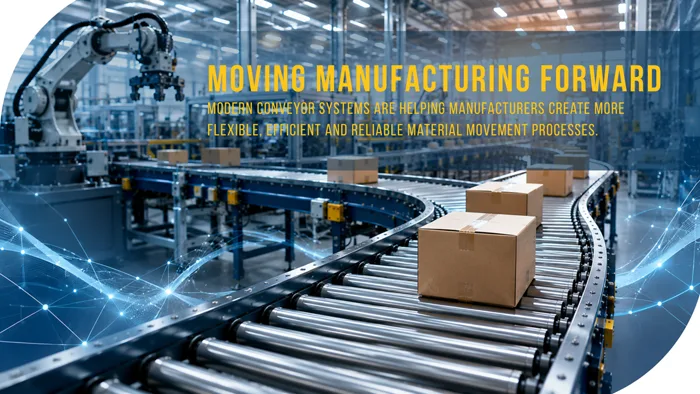
Manufacturing is becoming more focused on speed, efficiency, flexibility and consistent production. As manufacturers look for ways to improve material movement across their facilities, conveyor systems are evolving to meet changing production requirements.
From modular conveyor designs to greater focus on energy efficiency and integration, understanding the latest material handling trends in 2026 can help manufacturers make better decisions when planning or upgrading their production lines.
Flexible Conveyor Systems for Changing Production Needs
Manufacturing requirements can change as product lines expand, layouts are modified or production volumes increase. This is creating greater demand for flexible conveyor systems that can adapt to different production requirements.
Modular Designs and Scalable Systems
Modular conveyor solutions can make it easier to modify, extend or reconfigure material movement systems when production requirements change.
For manufacturers, scalability can provide:
- Easier system modifications
- Better utilisation of production space
- Support for future expansion
- Reduced disruption during upgrades
This makes modularity an important consideration when selecting a manufacturing conveyor system.
Greater Focus on Energy Efficiency
Energy efficiency is becoming an increasingly important factor in industrial operations. Manufacturers are looking beyond initial installation costs and considering the long-term operating efficiency of their conveyor systems.
Selecting the appropriate conveyor type, drive configuration and operating speed can help optimise energy consumption according to the application.
Efficient design can also contribute to lower operating requirements over the system's lifecycle.
Smarter Integration with Production Lines
Another important trend is the increasing focus on integrating conveyor systems with manufacturing processes.
Rather than functioning as an isolated transport system, conveyors can be designed to connect different stages of production and maintain a smoother flow of materials between workstations.
Better Flow, Less Manual Movement
A well-planned conveyor layout can reduce unnecessary manual transportation between production stages. This can support consistent material flow and improved workplace efficiency.
The focus is increasingly shifting from simply moving products to designing a more coordinated production flow.
Application-Specific Conveyor Design
Manufacturers are also moving away from one-size-fits-all solutions. Different products, loads, speeds and production environments require different conveyor configurations.
Depending on the application, manufacturers may consider roller conveyors, belt conveyors, slat conveyors, modular belt conveyors and other specialised conveyor systems.
The right solution should be selected based on the actual product and process requirements.
Designing for Reliability and Easy Maintenance
As production schedules become increasingly demanding, conveyor reliability becomes critical. Manufacturers are giving greater importance to durability, component accessibility and ease of maintenance during system selection.
A well-designed conveyor system should not only perform efficiently but also support straightforward inspection, maintenance and component replacement.
What These Trends Mean for Manufacturers
The key material handling trends of 2026 point towards a simple objective: move materials more efficiently while creating systems that can adapt to changing production requirements.
Manufacturers evaluating new conveyor systems should consider:
- Flexibility and scalability
- Energy efficiency
- Application-specific design
- Production-line integration
- Maintenance requirements
- Long-term reliability
Excel Conveyors designs and manufactures conveyor systems tailored to specific industrial applications, helping manufacturers create efficient and reliable material movement across their production processes.