

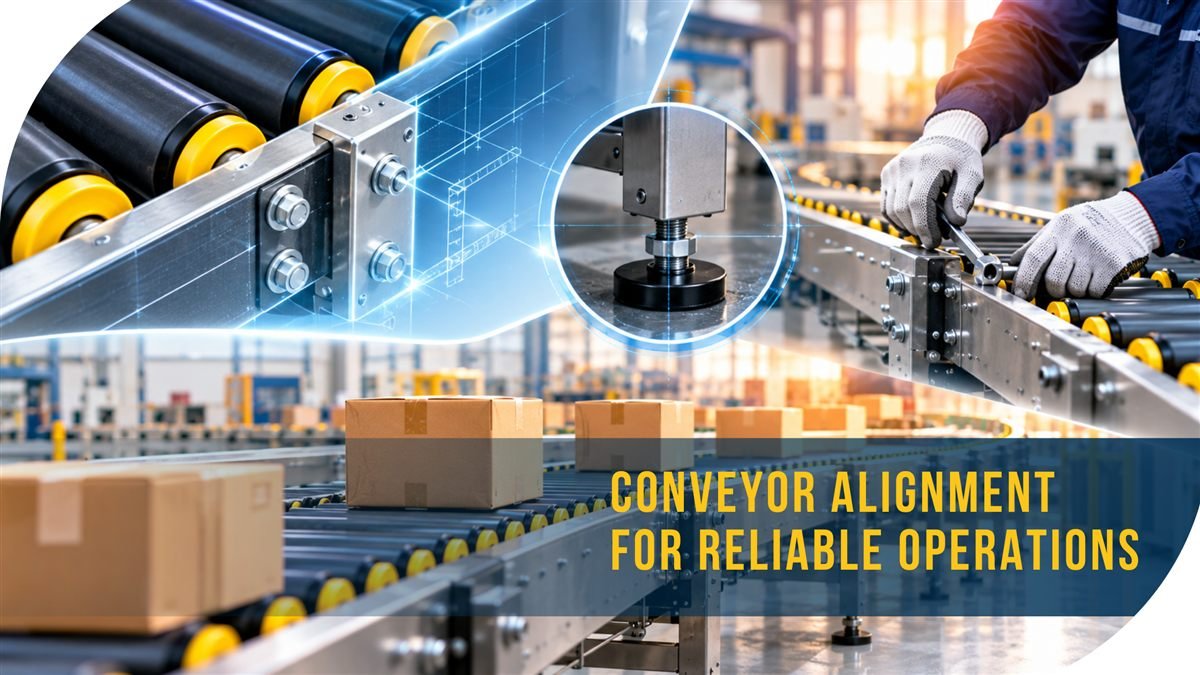
Keep Your Conveyor System Running Smoothly
A conveyor system works best when every component moves in the right direction. Proper conveyor alignment helps maintain smooth material flow, reduces unnecessary wear and supports consistent performance across industrial operations.
Even a slight misalignment can cause belt tracking issues, material spillage and additional stress on conveyor components. Addressing alignment at the right time can help businesses avoid preventable interruptions and keep their material handling systems operating reliably.
At Excel Conveyors, attention to conveyor system performance starts with understanding how individual components work together to support everyday operations.
Why Conveyor Alignment Matters
Conveyor alignment is essential for maintaining stable, efficient and dependable material movement. When the belt, pulleys and rollers are correctly positioned, the system can operate with fewer disruptions and less unnecessary mechanical stress.
Proper alignment helps businesses:
- Reduce belt wear: Prevent uneven friction and premature damage.
- Improve operational efficiency: Support smoother conveyor movement.
- Minimise material spillage: Help the belt remain on its intended path.
- Reduce downtime: Address tracking issues before they develop into larger problems.
- Support component life: Reduce unnecessary stress on belts, rollers and pulleys.
Common Problems Caused by Conveyor Misalignment
Misalignment may seem like a minor issue, but its effects can gradually impact the entire conveyor system.
Uneven Conveyor Belt Wear
When a belt consistently runs off-centre, certain areas may experience more friction and stress than others. This can contribute to premature belt damage and increased maintenance requirements.
Material Spillage and Product Loss
A belt that drifts away from its intended path can cause materials to spill along the conveyor route. This may increase cleaning requirements, waste material and create additional workplace hazards.
Increased Maintenance and Downtime
Misalignment can place additional stress on conveyor components. If left unaddressed, it may contribute to repeated adjustments, unexpected stoppages and higher maintenance costs.
How Proper Conveyor Alignment Improves Performance
Correct alignment supports the reliable operation of conveyor systems in demanding industrial environments.
Ensures Smooth Material Flow
When the belt tracks correctly, materials can move along the intended route with fewer interruptions. This helps maintain a consistent flow between different stages of an operation.
Helps Reduce Maintenance Costs
Proper alignment can reduce avoidable belt wear and unnecessary stress on conveyor components. Routine inspections and timely adjustments can help prevent minor issues from becoming costly repairs.
Improves Equipment Reliability
A well-aligned conveyor system is less likely to experience recurring belt tracking problems. This supports dependable operation and helps maintenance teams manage equipment more effectively.
Supports Safer Operations
Misaligned belts can contribute to spillage and other operational hazards. Maintaining correct alignment, alongside appropriate guarding and safety procedures, helps support a safer working environment.
Best Practices for Maintaining Conveyor Alignment
Consistent inspection and maintenance are essential to keeping conveyor systems aligned.
- Inspect belt tracking regularly: Look for drifting, uneven movement and signs of rubbing.
- Check pulleys and rollers: Ensure components are positioned correctly and rotate as intended.
- Monitor belt tension: Maintain the tension specified by the conveyor manufacturer.
- Inspect the conveyor structure: Check for loose fasteners, damaged supports and structural movement.
- Address problems early: Investigate recurring tracking issues instead of relying on repeated temporary adjustments.
- Follow manufacturer recommendations: Use appropriate inspection, maintenance and alignment procedures for the specific system.
Alignment issues may also be linked to loading conditions, pulley condition, belt damage or material buildup. Identifying the underlying cause is important for achieving a lasting solution.
Keep Your Conveyor System Performing at Its Best
Proper conveyor alignment is an important part of maintaining efficient material handling operations. From reducing belt wear to minimising spillage and avoidable downtime, regular alignment checks can help improve equipment reliability and support smoother workflows.
For industrial operations, the goal is not simply to keep a conveyor moving. It is to keep it moving consistently, safely and efficiently.
Looking to Improve Your Conveyor System's Performance?
Get in touch with Excel Conveyors to discuss your material handling requirements.
For business inquiries: sales@econveyors.in
Looking to improve your conveyor system's alignment and performance? Get in touch with us.