
How to Choose the Right Conveyor System for Your Manufacturing Unit
Choosing the right conveyor system for a manufacturing unit is not simply about selecting equipment to move materials from one point to another. The right conveyor should complement your production process, handle the required load, fit the available layout and support efficient material movement.
With different conveyor types available for different applications, understanding your operational requirements is the first step towards making the right choice.
Understand Your Material and Load Requirements
Before selecting a conveyor, evaluate the type of material that needs to be transported. Product size, weight, shape, surface and handling characteristics can significantly influence conveyor selection.
Consider Product Characteristics
For lightweight or sensitive products, the conveyor needs to provide controlled and consistent movement. Heavier components may require a more robust industrial conveyor system designed for higher load capacities.
Consider:
- Product dimensions and weight
- Required load capacity
- Material type and surface
- Product orientation
- Required movement distance
Understanding these factors helps narrow down the most suitable conveyor configuration.
Evaluate Your Production Layout
The physical layout of your manufacturing facility plays an important role in conveyor system selection. Available floor space, production stations, transfer points and required movement paths should be considered before finalising the design.
A conveyor may need to operate in a straight line, accommodate curves or connect multiple stages of a production process. The system should therefore be designed around the actual workflow rather than simply fitting available space.
Select the Right Conveyor Type
Different manufacturing applications require different conveyor configurations. Depending on the application, options may include roller conveyors, belt conveyors, slat conveyors, modular belt conveyors and other specialised conveyor systems.
Match the Conveyor to the Application
The right conveyor depends on factors such as product characteristics, required speed, load, accumulation requirements and production environment.
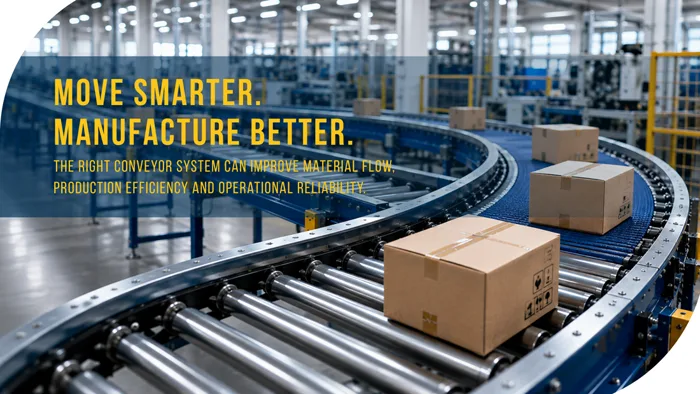
For example, roller conveyors can be suitable for handling rigid products and cartons, while belt or modular belt conveyors can support continuous movement of different product types.
Consider Speed, Throughput and Integration
Your conveyor should support the required production rate without becoming a bottleneck. Evaluate the desired speed, throughput and frequency of operation.
The system should also integrate smoothly with existing production equipment and workstations. Proper conveyor integration can improve material flow and reduce unnecessary manual movement.
Think About Maintenance and Long-Term Performance
A conveyor is a long-term investment, so maintenance requirements should be considered during selection. Easy access to components, suitable materials and a practical design can contribute to reliable operation.
Key considerations include:
- Ease of maintenance
- Component availability
- Operational reliability
- Energy requirements
- Future scalability
Choosing a system based on both present and future requirements can help maximise its long-term value.
Choose a Conveyor System Designed Around Your Needs
There is no single conveyor system that works for every manufacturing application. The best solution comes from understanding your product, process, layout, load and throughput requirements before selecting the equipment.
Excel Conveyors designs and manufactures conveyor systems based on application-specific requirements, helping manufacturers achieve efficient and reliable material movement across their production processes.